Speech and OT


A Parent’s Guide to Apraxia

Childhood apraxia of speech (CAS) can be a startling issue to confront at first. Everyone’s brain develops a muscle plan for the mouth, jaw, and tongue as they are learning to speak the language(s) they are raised around. In contrast to other speech impediments, the ability for the brain to perform this task isn’t weak but rather confused – there is an overall difficulty in coordinating the shapes and movements required to make the sounds. This can cause a distortion in how they pronounce vowels and consonants, distinct separations between syllables (within a single word or an entire sentence), or confusing similar sounding words, such as saying ‘batch’ instead of ‘patch’. This, however, is only a base line of examples, and can be confused with other language problems.

Symptoms to Look For
A lot of symptoms around CAS are present within other disorders, which can make it difficult to diagnose.  Articulation or phonological disorder is one where the child has trouble learning to make the sounds, but not any difficulty coordinating them. This creates a lot of substitutions in speech, such as ‘fum’ for ‘thumb’. To help distinguish CAS for other disorders there are a series of characteristics to look out for, such as trouble moving from one sound to another, distorting vowels, stressing the incorrect part of a word, using equal emphasis on all parts of the word, trouble mimicking simple words, and inconsistency within errors made in a word. To properly evaluate the condition, a series of tests will need to be conducted to identify a pattern of problems along with all their medical and family history to help determine any causes.

How to Discover the Issue

Unfortunately, the cause of CAS isn’t always easy to determine as doctors haven’t found a clear issue in the brain from case to case. Neurological injuries, such as stroke, infections, or trauma, are one cause, but CAS can also form from a genetic disorder, syndrome, or metabolic reasons. While the miscoordination within the brain may always be present, there is a slue of treatment options to help those with CAS work around the errors.

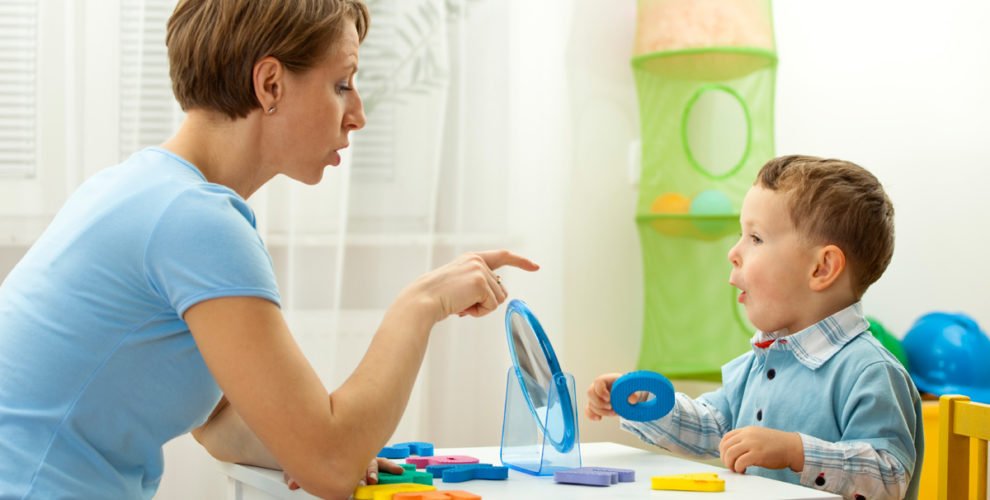
Speech therapy helps by focusing the child’s attention on the sound and how it feels to make the sound. A speech-language pathologist, like those of us here at Speech & Occupational Therapy of North Texas, can guide a child through paced learning, speaking practice, and sound and movement exercises before the practice is continued at home. This helps children impart their skills on a daily basis in real-life situations. Your physician can suggest other helpful tools for your child’s specific needs. Don’t give up hope! If you want more information, please contact us. We are glad to help!


Scours:https://speechandot.com/a-parents-guide-to-apraxia/


 During the first three years of your child’s life, he or she is going to undergo constant stimulation from new experiences. This can be exhilarating for most children, and even stimulate their growth and improve the development of their brain. However, for other children, this constant stimulation can also be a little overwhelming. Instead of letting them get to where they withdraw, there are options. Occupational therapy allows your child to explore these stimulants in a safe, non-threatening way which can help them grow in many different ways.


Early Intervention and Early Stimulation Can Help Children Grow with Their Peers

The goal of these early intervention programs is to expose children to stimulants that will often be a part of their daily routine. It allows them to see things as normal when exposed to them the right way, which can help them overcome any feelings of discomfort when exposed to those same things down the line. Here are a few things you can do to help increase these stimulants at different ages, to help your child with proper development.

As infants, children need to be encouraged to explore. They should have tummy time and learn to crawl instead of going straight to walking whenever possible. They should also be given opportunities to explore tactile items, like crayons and chalk.

Toddlers have slightly larger needs in that they are larger children. They should be learning to converse with those around them, with the goal of learning to use full sentences. The more they can describe what they want or need in detail, the better. Writing, copying, and drawing should be a regular part of their routine. These fine motor skills are very important as children develop.

Large motor skills also need some work during this time. Giving your child the ability to maneuver an obstacle course can help them here. Consider things to climb over, under, or through, as well as having areas to run around or tiptoe across gives them multiple things to do. You can also incorporate kicking, using a baseball bat, and jumping into this course.

Role-playing and playing pretend is also a way to help increase early stimulation. Let your child pretend to be what he or she wants to be. Allow them to dress up, pretend to cook, care for others to develop empathy, and anything they can safely imagine. This helps develop the brain and allows them to safely explore their emotions.

If you are looking for other ways of helping with early stimulation in your child’s life, give our office a call. We would love to give you some extra ideas to help your child learn to love learning.

 Children with sleep disorders can quickly find themselves with problems including learning impairments and poor behavior. Children with sleep disorders should be treated as soon as possible to manage the condition and to prevent damage to the childrens’ development. Our staff at Speech and Occupational Therapy of North Texas is trained to diagnose and treat a variety of childrens’ sleep disorder


Obstructive Sleep Apnea

Obstructive sleep apnea – also known as OSA – is a condition where the patient’s airways are blocked or restricted during sleep. OSA occurs most often for children when they have enlarged tonsils. However, other causes such as excessive soft tissue near the airways, obesity, and distortions in the airway size can also cause or contribute to OSA. Up to 5% of children could be affected by OSA.
Parasomnias

“Parasomnias” is a blanket term for behaviorally based sleep disorders, including sleepwaking, nightmares, and talking during sleep. Roughly 50% of children have some form of parasomnia. Parasomnias can be influenced by genetics, and lack of sleep can aggravate or catalyze parasomnias.

Behavioral Insomnia

Behavioral insomnia is a learned or acquired inability to either fall asleep or remain asleep. Up to 30% of children could have some form of behavioral insomnia. Sleep-onset insomnia is any condition where a child refuses to fall asleep or remain asleep until a demand is met, or a condition is fulfilled. Limit-setting insomnia is the result of parents not setting or enforcing limits regarding childrens’ sleeping habits and times. Unlike most other sleep-related disorders, behavioral insomnia can be prevented through mature definition to, and adherence of, rules regarding sleeping accommodations and bedtimes.

Delayed Sleep Phase Disorder

Delayed sleep phase disorder occurs when childrens’ circadian clocks are offset by external stimuli. Exposure to light is the most common stimulus that interferes with childrens’ sleep cycles. Other factors, such as body temperature, timing of meals, and timing of physical activity can also interfere with childrens’ sleep schedules. Controlling or reducing the factors that interfere with childrens’ circadian clocks is a crucial part of treating delayed sleep phase disorder.

Restless Leg Syndrome

Children with restless leg syndrome have the uncomfortable urge to move their legs, triggered by an uncomfortable or even painful sensation. Factors that may trigger restless leg syndrome include hyperactivity, iron deficiency, and genetics. Restless leg syndrome can be difficult to diagnose in children, and there is no medication that remedies the condition. However, there are treatment plans available to mitigate the effects of restless leg syndrome.

If you’re seeking help to treat your childrens’ sleep disorders, please contact us at Speech and Occupational Therapy of North Texas to schedule a consultation and establish a treatment plan for your child.


 Fine motor skills are essential for child development. Therefore, always make sure your child is involved in different home activities to help in her growth. Experts believe that kids of this generation have weaker motor skills compared to previous generations. This could be due to the changes in the ways toddlers are brought up. Some children also experience delays in how their fine motor skills develop, so it is important to have ideas on ways of improving their skills.

How Do Fine Motor Skills Help Your Child?

For your child to be active and have a healthy cognitive function, he or she needs to develop excellent motor skills. These skills help a toddler to enhance the body strength as well as be able to move the different parts of the body, such as whole hand and whole arm, pincher grip, and Pincer grip. That makes it easy for your child to hold something, climb, or run up and down. This is not a stage as many parents think it’s a skill that should be developed through different activities at home or school.

What Are Some of the Home Activities That Can Help Improve Fine Motor Skills?

As much as you love your child, make sure he or she undertakes different activities at home to enhance their fine motor skills. There are various home activities that you can use to improve fine motor skills which include:

  • Sorting small objects at home, such as buttons, beads, or dried beans – choose the objects that can be sorted either by size, shape, or color, then give it to your child to do the sorting work and provide a small bowl or a tray where to sort them.
  • Placing pipe cleaners or straws into a bottle.
  • Pouring water from one container to another – here, your child will get better by the way she holds the small jugs and eventually develop grip.
  • Hanging clothes with pegs, this is quite a great skill. Get your child to help you in laundry and allow him or her to hang the doll clothes with pegs.
  • Putting coins into a money box – kids love the sound coins produce when they get into the money box. Give them that job of placing the coins through the small hole in the money box.
  • Drawing or writing. While you are doing your work at home, you can get your kid a pen and a drawing board. Kids like doing what others are doing, so while you are writing something or making some notes, allow your child to use his or her pen also to write.

Your child should be actively involved in various home activities for natural motor skill development. Do you want to have some help for your child to develop these motor skills? Contact us and let us help.

 When children struggle with daily activities, there are many different options to help them progress. One of the best options is allowing children to participate in occupational therapy. This type of therapy helps children learn how to grasp concepts that they may otherwise struggle with. There are many types of therapy that fall under the umbrella of occupational therapy. Each of the types of therapy can help children progress with different tasks in their lives.

Types of Therapy Children Can Progress With

Speech therapy is one of the most common types of occupational therapy. These simple games and practices allow children to speak more clearly, and learn to express things they may need. This can include talking about how your child feels, explaining his or her needs, or even learning to ask questions to help them overcome daily challenges.

Fine motor skill therapy can also help children overcome some daily challenges. For some children, doing things like tying their shoes or buttoning a button are difficult. By going through occupational therapy, children are better able to accomplish these tasks on their own without the help of others. This type of therapy can also help children do things like writing more legibly or even using small devices, such as scissors.

Therapy for gross motor skills can also help children. Many struggle with specific tasks that require large muscle coordination. This type of therapy can help children do things like sitting up straight, walking without bumping into things, and doing activities like jumping jacks.

Many children can also benefit from strategy therapy. This teaches children how to plan out their day to get the most accomplished or to make the most logical sense. This can include helping them plan out their day at school, figure out which homework to do first, or how to make sure they accomplish a small list of chores each day in the most efficient manner.

Getting Help with Occupational Therapy

If you want to help your child get ahead, you may want to get them into occupational therapy. There are many types of skills that can improve with the repetition and projects that come with occupational therapy. No matter where your child struggles, there is something that can be done to help them gain independence and confidence. Reach out to us here at Speech & Occupational Therapy of North Texas and tell us what it is your child struggles with. We will then help you come up with a plan to help them overcome those challenges and move forward with confidence.

 Language Stimulation for Children

Language stimulation is a set of activities and procedures that a parent, guardian, or educator can perform to promote a child’s language comprehension. When used properly, language stimulation can help a child learn and understand additional words, speak in longer sentences, participate in back-and-forth communication, and learn how to use language for a variety of social situations

Self-Talk

Self-talk is a language stimulation technique in which the parent, guardian, or educator describes their actions before or while performing them. Self-talk is more potent when the child being taught is involved. One example of self-talk would be, “I’m sitting next to you so I can see what you’re trying to put into your mouth.”

Parallel Talk

Parallel talk is similar to self-talk, but it focuses on the child’s actions instead of the actions of the parent, guardian, or educator. It is important to use pauses, eye contact, and body language when employing parallel talk to encourage the child to participate in the communication. One example of parallel talk would be, “It’s your snack time. You’re eating applesauce. When you finish eating your applesauce, you will eat some orange slices next.”

Child-Directed Speech

Child-directed speech is not the same concept as “baby talk.” Child-directed speech involves the parent, guardian, or educator changing the pitch, tone, and tempo of their voice to make the voice easier for the child to understand. Pronounced fluctuations in pitch, slow speaking rates, frequent pauses, and clear, emphasized pronunciations are some factors that can help a child understand an adult’s speech more clearly.

Expansions

The expansions technique prompts the parent, guardian, or educator to take a one-word or two-word phrase from a child and turn it into a complete and relevant sentence. Not only will expansions teach the child how to form complete sentences, expansions indicate that the adult is listening to the child. For example: if the child sees a dog and says, “doggy,” the adult could use expansion and say, “Yes, the dog is running through the park with its owner.”

Extensions

Extensions are similar to expansions, where the parent, guardian, or educator takes the child’s speech and lengthens it to a complete sentence. However, extensions differ in how they’re used; when a child combines two or more words, but does not yet have a complete sentence, the adult creates a complete sentence. This allows the adult to subtly correct the child and teach the child how to use the words properly. If a child were to say, “Car go,” the adult could use extensions to respond, “The car is red. The red car is going towards the stop sign. The red car stops.”

If you have questions or concerns about your child’s speech and language development, please feel free to contact us at the Speech and Occupational Therapy in North Texas to schedule a consultation.

 There are some great tools for isolating areas for sensory integration disorder treatment.  The Sensory Profile, which was developed by Winnie Dunn, Ph.D., is often used as part of the assessment process when sensory integration disorder is suspected.   It is designed to “profile the effect of sensory processing on functional performance in the daily life of a child.” (p. 1, Sensory Profile Manual, 1999).  Pediatric occupational therapists and speech language pathologists gain important insight from the results of this assessment.

The Sensory Profile utilizes a caregiver questionnaire, which the professional reviews with the parent.  Completing the profile is an educational experience in itself.   As a parent, caregiver, or teacher goes through each section, there is a realization that the behaviors they have observed are associated with particular neurologically-based sensory responses.  The Profile is divided into sections that look at auditory processing, visual processing, vestibular processing, touch processing, and multisensory processing to name a few.   As each section is completed, the parent or teacher rates how the child responds to a given situation.  In auditory processing, for instance,  the parent responds to statements like “Can’t work with background noise (for example, fan, refrigerator)” and “Doesn’t respond when a name is called but you know the child’s hearing is okay”.  Each section is further divided by whether a particular statement indicates a high threshold or low threshold for sensory information.

After the entire profile is scored, the results are placed into four quadrants:*

High Neurological Thresholds – It takes more sensory stimuli than is typical

Registration-The degree to which a child misses sensory input.  A child with a Definite Difference Score in this pattern misses sensory input at a higher rate than others.  This means the child is under-responsive to sensory stimuli or input or they are responding in accordance with the threshold.

Seeking-The degree to which a child obtains sensory input.  A child with a Definite Difference score in this pattern seeks sensory input at a higher rate than others.  This means that the child is over-responsive to sensory input or is responding to counteract the threshold.

Low Neurological Thresholds – It takes less sensory stimuli than is typical

Sensitivity– The degree to which a child detects sensory input.  A child with a Definite Difference score in this pattern notices sensory input at a higher rate than others or respond with oversensitivity to stimuli.   This means that their sensory system is over-responsive so even little things will cause them to stop what they are doing to pay attention to the new activity around them.

Avoiding– The degree to which a child is bothered by sensory input.  A child with a Definite Difference score in this pattern moves away from sensory input at a higher rate than others.    This means that the child is over responsive to sensory input or responds by avoiding stimuli.

*Definitions taken from the Sensory Profile Manual

Combined with other assessment results, one sees how helpful it is to have an understanding of a child’s sensory processing.  Not only for designing appropriate treatment activities but in planning the environment in such a way that the child is best able to take in new information.  When planning sensory integration disorder treatment, the Sensory Profile offers valuable insight into a format that is helpful for families and professionals.   Though occupational therapists use this information extensively when designing treatment, speech-language pathologists also benefit from the Sensory Profile when developing goals and effective learning environments for a child with sensory challenges.  For more information about sensory integration disorders, visit www.speechandot.com.